Chemicals classification: indicators for implementing the UN's GHS
The United Nation's Globally Harmonised System of Classification and Labelling
of Chemicals (GHS)1 is an international initiative to standardise how chemicals
are managed across the world. A recent study has proposed a suite of indicators
which measure progress in implementing the GHS.
Over the years, a variety of systems have been used in different countries to
classify chemicals according to their hazardous properties and to provide
information about these hazards to chemical users. A single classification and
labelling system, such as the GHS, can harmonise national systems. The GHS
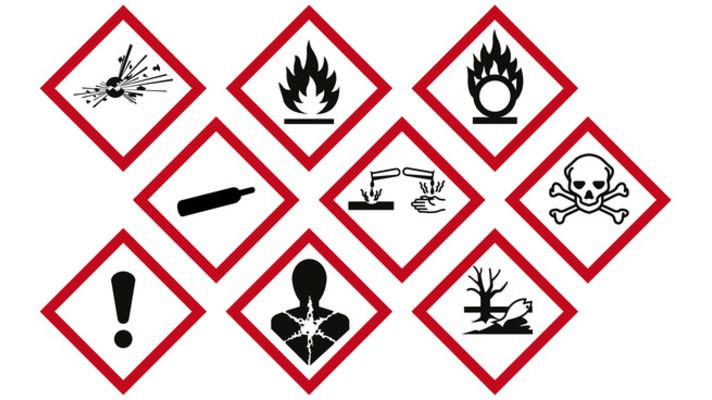
provides a standard approach to classifying chemicals according to their
environmental, health and physical hazards and to communicating these hazards
via labels and safety data sheets.
The United Nation's Globally Harmonised System of Classification and Labelling of Chemicals (GHS)1 is an international initiative to standardise how chemicals are managed across the world. A recent study has proposed a suite of indicators which measure progress in implementing the GHS.
Over the years, a variety of systems have been used in different countries to classify chemicals according to their hazardous properties and to provide information about these hazards to chemical users. A single classification and labelling system, such as the GHS, can harmonise national systems. The GHS provides a standard approach to classifying chemicals according to their environmental, health and physical hazards and to communicating these hazards via labels and safety data sheets.
In the EU the new Regulation on the Classification, Labelling and Packaging of Chemical Substances and Mixtures2 incorporates the classification and labelling standards of the GHS. The Regulation also takes over certain provisions of Registration, Evaluation, Authorisation and Restriction of Chemical substances (REACH)3 regarding the notification of classifications, the establishment of a list of harmonised classifications and the creation of a classification and labelling inventory. The GHS is a voluntary initiative and whilst the 2008 target date for adoption has passed, many countries have made significant progress towards this target. However, no country has fully implemented the whole system.
This study outlines a collection of suitable indicators that can be used to measure progress in implementing the GHS at country-level. It used an approach whereby the implementation process consists of two parts: policies and actions.
Individual countries need to develop national policies for addressing the GHS according to their own circumstances, for instance, the extent of their industrial development. Priorities should be identified for particular GHS topics, including legislation issues and awareness-raising. Sector-specific plans for the industrial workplace, agriculture, transport and consumer products should be co-ordinated under a policy framework for managing chemicals. These plans should be developed with input from relevant stakeholders, including government, industry and civil society, where possible.
A range of actions are needed when planning implementation of GHS at the national level: for example, regulations for the management of chemicals in all sectors or support for companies adopting the GHS which would increase opportunities for international trade.
Indicators and indices (aggregate indicators) can help decision makers monitor the effectiveness of the policies and actions taken in implementing the GHS. Global surveys can be taken using simple questionnaires based on the indicators, which provide information to develop country scores that measure capabillity to implement the GHS.
Indicators can be considered 'key success factors' for GHS implementation. One group of proposed indicators determine whether a country has the management capabilities to implement the GHS. These indicators relate to policies (governance structures and the multi-stakeholder approach) and actions (capacity building, information management and training) that are being undertaken or planned.
A second set of indicators can be used to determine the progress a country has made towards implementing the GHS. These performance indicators compare the current situation with defined objectives and goals. In addition, indicator scores could be used to help countries highlight specific areas that need strengthening.
Source: Peterson, P.J., bin Mokhtar, M., Chang, C., Krueger, J. (2010). Indicators as a tool for the evaluation of effective national implementation of the Globally Harmonized System of Classification and Labelling of Chemicals (GHS). Journal of Environmental Management. 91:1202-1208.
Contact: peter.peterson@unitar.org
Sdílet článek na sociálních sítích