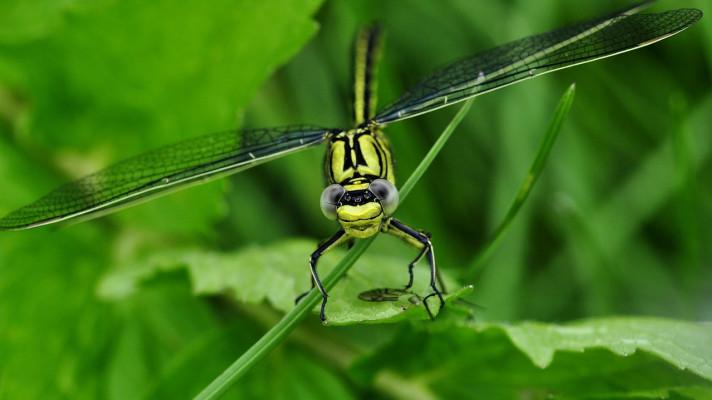
Langstone, Hampshire: I'd seen St Mark's flies on the wing last spring; this year I was surprised to find them breeding in my gardenI was digging in a planter this week, attempting to winkle out the roots of a particularly stubborn clump of self-sown grass, when a large, black fly crawled sleepily out of the compost. Dipterous (fly) fauna can be difficult to identify, but this individual was one of our most recognisable species of true flies, the St Mark's fly (Bibio marci), so named as the first sightings often occur around 25 April - the feast day of St Mark. Though I saw them on the wing last May, it was a surprise to discover that they were breeding in my garden. Once they hatch, the larvae require humid conditions and feed on decomposing organic matter, so damp grassland, woodland edges and riverbanks tend to be their favoured habitat.The fly was around a centimetre in length, with a slender body and elongated, translucent wings. As it shuffled into the sunlight, its thorax and legs shone like polished jet. Its head was dominated by large, bulbous eyes - a male. A horizontal groove divides the male's eyes into two parts, each with an independent connection to the brain. The lower eye keeps track of the fly's position in relation to the ground, while the upper part is ever-alert for an eligible female - advantageous when your sole purpose is to procreate but you only have a life expectancy of about a week. By contrast, females have narrower heads with much smaller eyes. Continue reading...
Country diary: A cloud of male flies drifts by, while the females bask below | Claire Stares
26. května 2023 9:30
Příroda
Zdroj: The Guardian