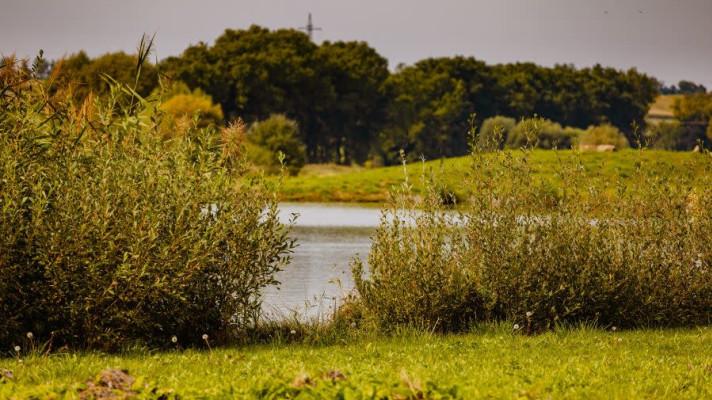
Llandrindod Wells, Powys: The old country crafts of laying hedges are still practised here, leaving the verges thick and billowy with meadowsweet, elder and dog rosePleaching, it's called - the interweaving of live saplings as foundation for field-hedges. In this part of Wales the plants most commonly used are hazel in particular, along with holly, elder, sweet briar and hawthorn. An occasional oak is interspersed to provide spreading shade for grazing livestock on days of fierce summer heat, when tails lash frantically across twitching flanks where biting flies cluster. Elsewhere in Wales, laburnum and blackthorn are in widespread use. The non-native laburnum is an 18th-century import from South America, chiefly found in Carmarthenshire. The toxicity of the plant ensures that cattle will not browse and thus weaken the hedges.Every winter tractors crawl along Welsh lanes, cutting blades attached to their hydraulics to pare back summer growth. The sturdy woven structure of the hedges is laid bare to view. Heifers and ewes probe at gaps, but well-laid and well-maintained hedges offer few chances of escape. Rabbit, hare, fox and mustelidae pass easily through, leaving behind teasing evidence of their passage: trodden paths through the verges, routes taken up immediately across the roadway, tufts of fur caught in strands of barbed wire at ground level. Continue reading...
Country diary: The heavy, honeyed smell of summer in Wales | Jim Perrin
8. červenece 2023 10:01
Příroda
Celý článek: https://www.theguardian.com/environment/2023/jul/08/country-diary-the-heavy-honeyed-smell-of-summer-in-wales
Zdroj: The Guardian