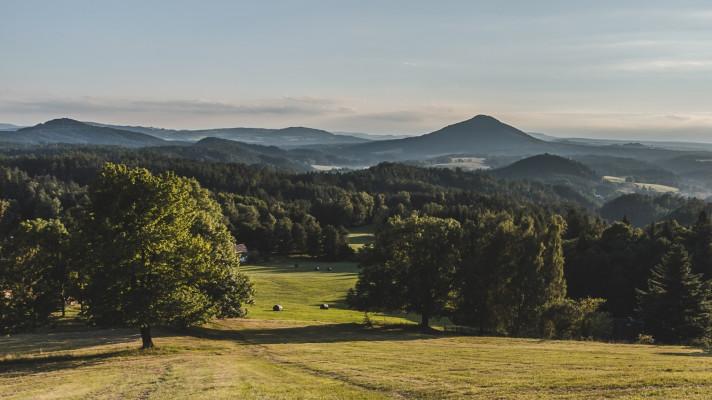
Glen Feshie, Cairngorms national park, Scotland: We take a bike ride through a glacial trough that slowly but surely become a wildlife haven The Feshie is a river of time and change. It's a sunny morning when we pedal up through the pine forests along its western banks. Some of these trees are commercial plantation, but others are fragments of the ancient Caledonian forest. It was nearly destroyed by the felling of successive wars, leaving Glen Feshie a wasteland of stumps by the mid-1940s. Regeneration was hampered by overgrazing until new estate management over the past 25 years, including controversial but effective deer culls, ushered in a revival of the original trees: scots pine, birch, rowan, willow, alder and juniper.The artery of the glen is the river. It is born high in the humpy brown hills to the south of us and descends on a wiggly route east, then north, then east again till it turns a sudden elbow back to the west. Curving along the bottom of the central Cairngorms, it gathers tributaries like eager acolytes, till it swells and flows north, all the way to the River Spey. Much of the route we cycle now is a glacial trough, marked by river terraces and alluvial fans. Continue reading...
Country diary: A valley revived, as far as the eye can see | Merryn Glover
14. srpna 2024 10:18
Příroda
Celý článek: https://www.theguardian.com/environment/article/2024/aug/14/country-diary-a-valley-revived-as-far-as-the-eye-can-see
Zdroj: The Guardian